Description of the project
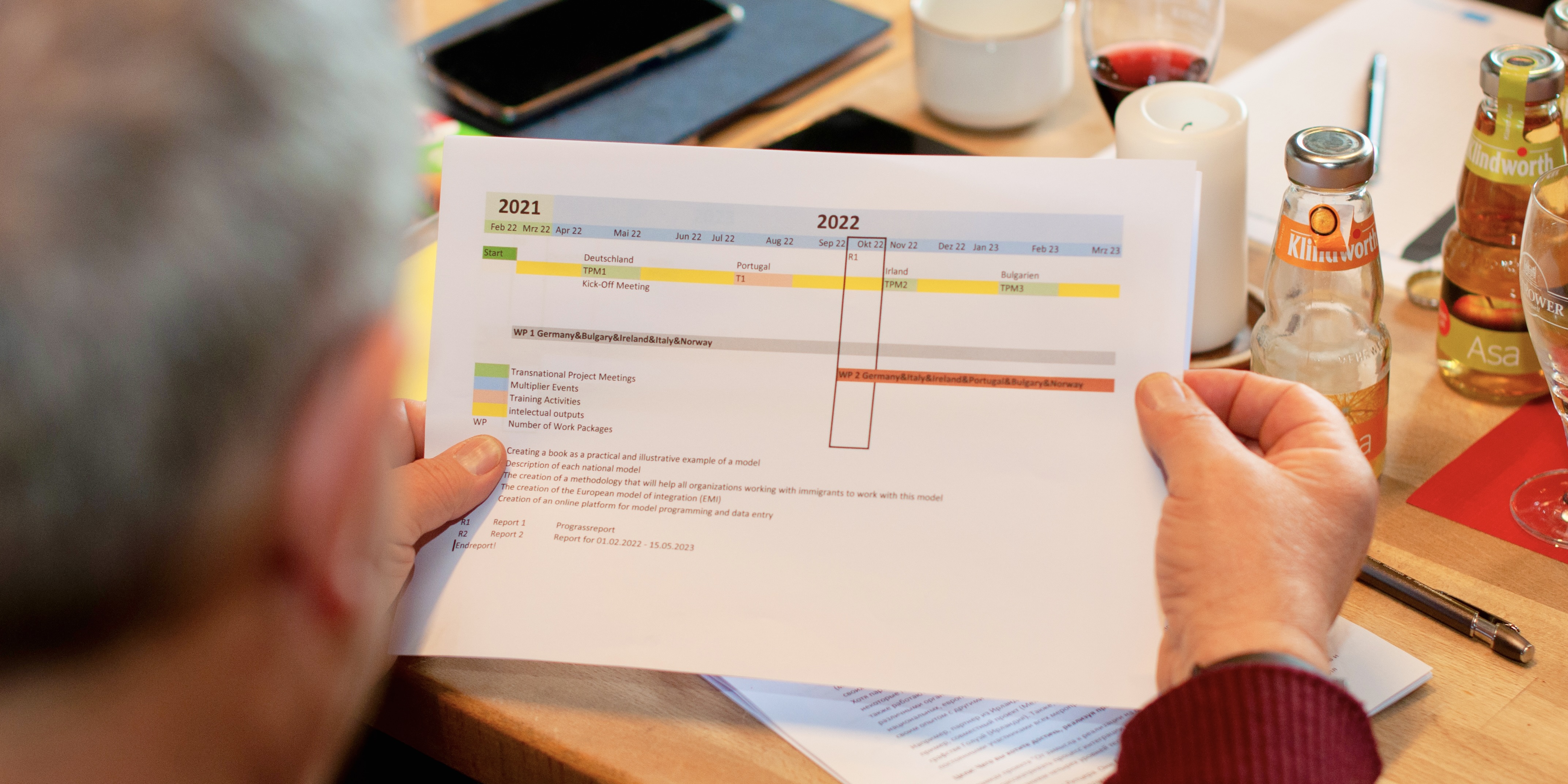
The project «From intention to implementation based on European know-how», 2021-1-DE02-KA220-ADU-000035919 takes place from 1/02/2022 until the 31/10/2024 and is supported by the program ERASMUS+ partnership for cooperation in adult education.
The multidisciplinary team of project partners from Italy, Portugal, Bulgaria, Norway, Ireland and Germany analyses the integration process of migrants and refugees in the project "From intention to implementation based on European know-how" at national level, using the four levels of George Ritzer's theory.
As a result of this project, we offer an EMI model of European integration of migrants and refugees as a European guideline for an integration process (EMI: European Model of Integration).
The EMI can help to understand the complexity of the integration process, to compare European countries at the personal (micro-subjective), social (micro-objective), cultural (macro-subjective) and governmental (macro-objective) levels, to enable and compare integration practices in Europe. This, in turn, can contribute to a more precise identification and understanding of country-specific resources and deficits. The EMI provides an overview of good functioning and educational practices.
The project had several objectives.
On the one hand, we offer a modern set of tools to identify the resources needed for successful integration. On the other hand, it's about raising awareness and understanding of the integration process based on concrete examples from the partner countries Germany, Bulgaria, Italy, Ireland and Norway. In addition, it's about support/creation of a platform for European networking of selected national actors working on the four levels analysed according to George Ritzer's theory.
The EMI model is intended to be used for training purposes by organisations involved in the integration process of immigrants and refugees in European countries.
We organised a workshop at the beginning of the project to get a feel and understanding for working with the integration model. And we are proud and happy to say that we have already received positive feedback on the use of our model with different groups of migrants.
A total of 7 transnational project meetings were organised and held during the project. The project meetings alternated between the project partners and were organised by the respective project partner.
